When Do Veterans Need Home Care?
Last Updated: April 2, 2026
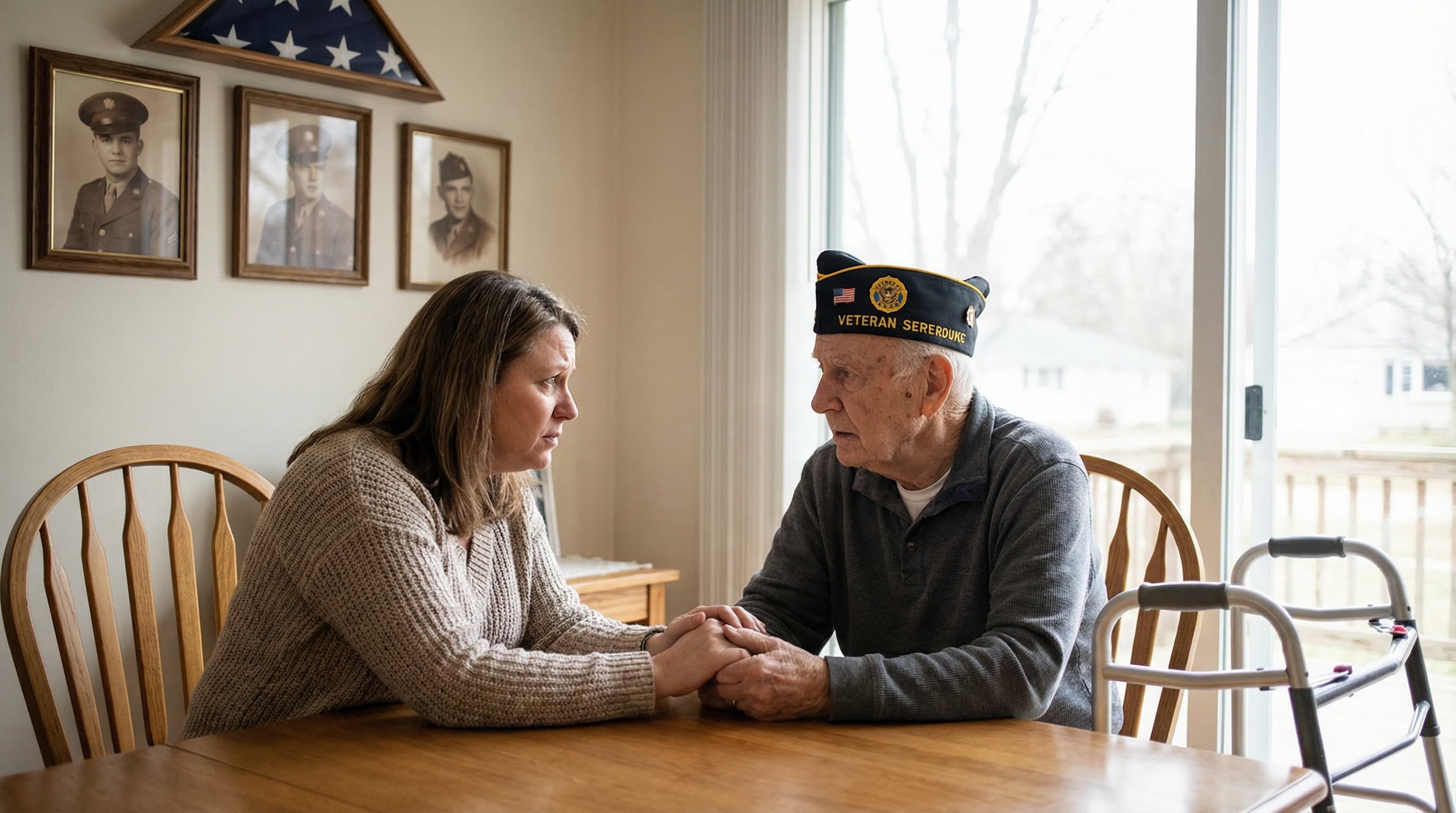
Veterans may need home care when they struggle with activities of daily living, experience worsening service-connected conditions, have PTSD symptoms that affect safety, recover from VA hospital stays, or reach the point where living alone becomes risky. Recognizing these signs early allows veterans to maintain independence at home with professional support rather than waiting until crisis forces abrupt changes. Understanding veteran-specific care needs and available VA benefits helps families plan proactively.
Common signs veterans need home care
Difficulty with activities of daily living (ADLs)
- Bathing: Difficulty getting in/out of tub, fear of falling in shower, poor hygiene
- Dressing: Wearing same clothes multiple days, inappropriate clothing for weather, struggling with buttons/zippers
- Eating: Weight loss, spoiled food in refrigerator, skipping meals, difficulty using utensils
- Toileting: Incontinence, bathroom accidents, difficulty reaching bathroom in time
- Transferring: Trouble getting up from chair, falling when standing, unable to get out of bed safely
- Mobility: Unsteady gait, recent falls, avoiding stairs, using furniture to steady while walking
Household management challenges
- Home becoming cluttered or uncharacteristically messy
- Unpaid bills piling up, utilities being shut off
- Difficulty managing medications (missed doses, double dosing, expired prescriptions)
- Refrigerator with expired food or empty refrigerator
- Neglected home maintenance (broken fixtures, unsafe conditions)
- Car accidents, traffic violations, getting lost in familiar areas
Service-connected condition progression
- Hearing loss worsening: Missing phone calls, not hearing smoke alarms, social isolation from communication difficulty
- Mobility decline: Service-related injuries or conditions making movement more difficult
- PTSD intensifying: Increased hypervigilance, more frequent flashbacks, avoiding leaving home
- Chronic pain increasing: Service-related pain limiting activity and independence
- Exposure-related illnesses: Agent Orange, burn pit exposure conditions progressing
Memory and cognitive changes
- Forgetting to take medications or taking wrong doses
- Asking the same questions repeatedly
- Getting confused about time, place, or familiar people
- Wandering or getting lost in familiar places
- Poor judgment or decision-making
- For veterans with PTSD: Dementia may cause re-experiencing of trauma (see veterans dementia care)
Veteran-specific care triggers
Beyond typical aging concerns, certain veteran-specific situations indicate need for care:
VA hospital discharge
- VA recommends home care for recovery period
- Needs assistance with wound care, physical therapy exercises, medication management
- Temporary weakness following surgery or illness
- VA social worker mentions "high risk for readmission without support"
PTSD safety concerns
- Increased agitation or aggression making self-care difficult
- Hypervigilance leading to sleep deprivation
- Avoiding necessary activities (bathing, medical appointments) due to triggers
- Family caregiver burnout from managing PTSD episodes
- VA mental health provider recommends additional support
Spouse or family caregiver decline
- Veteran's spouse who provided care is now ill or injured
- Family caregiver showing signs of burnout, depression, health decline
- Adult children living far away can no longer provide regular help
- Loss of spouse leaves veteran alone and unable to manage independently
Assessing care needs
Use these questions to evaluate whether veteran needs professional home care:
Safety assessment
- Has the veteran fallen in the past 6 months?
- Are there safety hazards in the home (poor lighting, clutter, no grab bars)?
- Does the veteran wander or get confused about location?
- Is the veteran taking medications correctly?
- Can the veteran respond to emergencies (call for help, use medical alert)?
Independence assessment
- Can the veteran bathe and dress independently and safely?
- Is the veteran eating nutritious meals regularly?
- Can the veteran manage household tasks (laundry, cleaning, shopping)?
- Is the veteran able to get to medical appointments?
- Does the veteran have social engagement or is isolation increasing?
Health status assessment
- Are chronic conditions well-managed or worsening?
- Has there been weight loss or gain?
- Is the veteran attending all VA medical appointments?
- Are service-connected disabilities progressing?
- Has VA doctor or social worker recommended home care?
Starting the conversation
Many veterans resist accepting help. Approach the conversation with respect for military independence:
Effective approaches
- Frame as maintaining independence: "Home care helps you stay at home instead of moving to a facility"
- Respect military values: "You served your country, you've earned this support"
- Use concrete observations: "I noticed you fell twice last month, I'm worried about your safety"
- Offer trial period: "Let's try it for a month and see if it helps"
- Emphasize VA benefits: "You're eligible for VA Aid & Attendance to help pay for this"
What not to say
- ❌ "You can't take care of yourself anymore" (diminishes capability)
- ❌ "You're too old to live alone" (focuses on age not specific needs)
- ❌ "If you don't accept help, you'll have to move to a nursing home" (threatening ultimatum)
- ❌ "Everyone your age needs help" (dismisses individual assessment)
- ✅ Instead: "I want to help you stay independent at home. Professional caregivers can assist with specific tasks so you can focus on what matters to you"
Levels of care for veterans
Care needs range from minimal assistance to comprehensive support:
Companionship care (lowest level)
- For: Veterans who are mostly independent but benefit from company and light assistance
- Services: Social engagement, meal preparation, light housekeeping, transportation, medication reminders
- Typical schedule: 2-3 visits per week, 2-4 hours each
Personal care assistance (moderate level)
- For: Veterans needing help with ADLs but not 24/7 supervision
- Services: Bathing, dressing, toileting, mobility assistance, medication management, meal preparation
- Typical schedule: Daily visits or multiple daily visits, 2-8 hours total
Extensive care (high level)
- For: Veterans with significant care needs, advanced dementia, or safety risks
- Services: All personal care plus continuous supervision, specialized dementia care, PTSD crisis management
- Typical schedule: Live-in care or 12-24 hour shifts
VA assessments and recommendations
VA healthcare providers can help assess care needs:
- VA social worker assessment: Available at all VA medical centers for enrolled veterans
- VA geriatrics evaluation: Comprehensive assessment for veterans 65+
- VA Home Based Primary Care evaluation: Determines eligibility for VA in-home medical services
- Aid & Attendance medical exam: VA Form 21-2680 documents care needs for benefit application
Taking action when care is needed
Immediate steps
- Schedule VA appointment to discuss care needs with doctor or social worker
- Contact veteran-friendly home care agencies for assessments and quotes
- Apply for VA Aid & Attendance if eligible (can take 3-6 months, start early)
- Explore all payment options (VA benefits, TRICARE, Medicare, insurance)
- Start with trial period to ease veteran into accepting help
Free Care Assessment for Veterans
Free in-home care assessments and VA benefit consultation for veterans in Ohio and Maryland.
Ohio: (740) 276-8611 | Mid-Ohio Valley
Maryland: (443) 291-7100 | Southern Maryland
Related Resources
- What is Veterans Home Care? →
Overview of home care services tailored to military veterans
- Veteran-Specific Care Services →
PTSD-informed caregiving and military culture-aware assistance
- VA Aid & Attendance Benefit →
Up to $2,431/month to help pay for home care