Veterans Dementia Care: Memory Support with PTSD Awareness
Last Updated: April 2, 2026
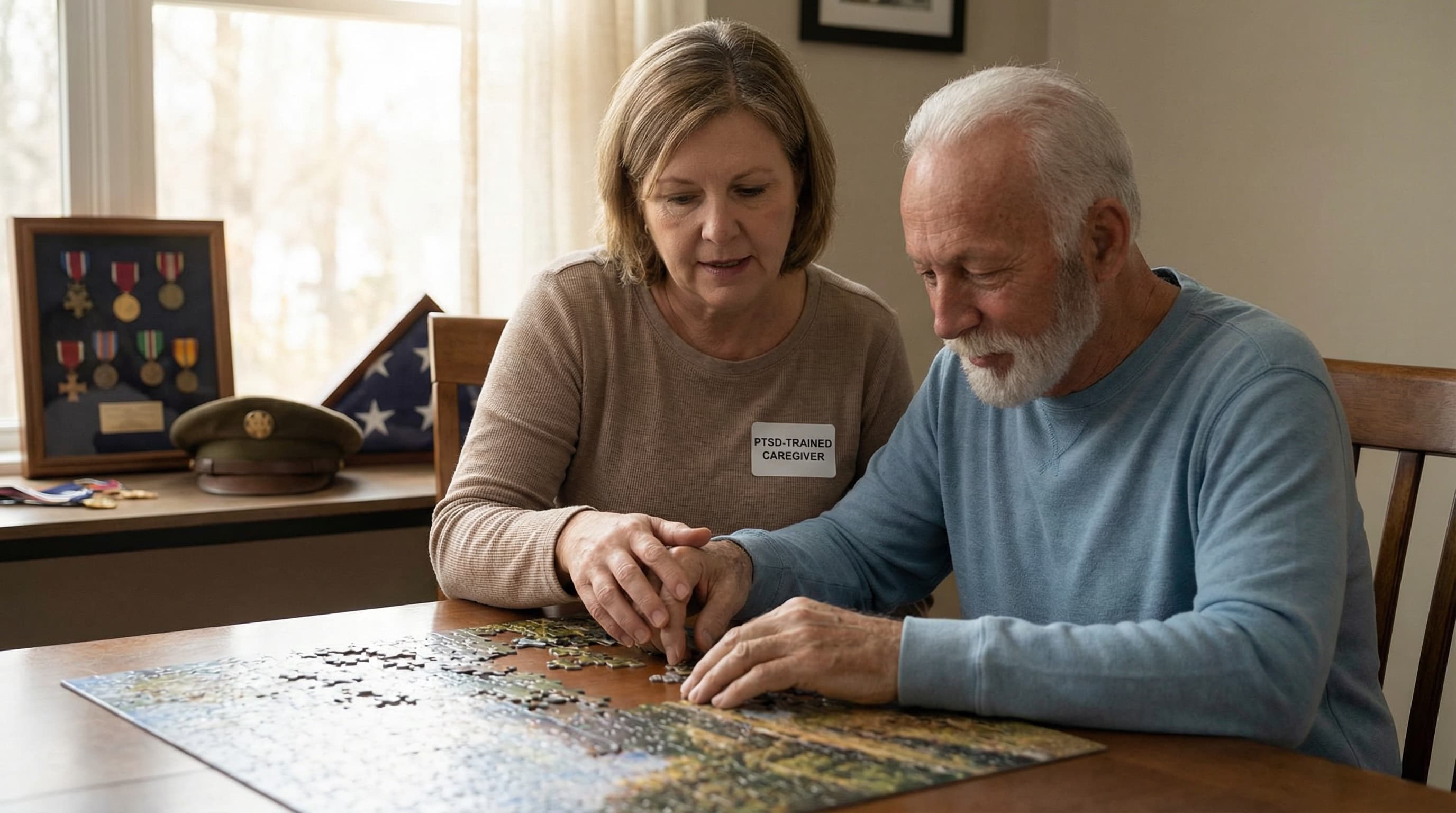
Veterans with dementia require specialized care that combines standard memory support with military culture awareness, PTSD-informed approaches, and understanding of how combat trauma interacts with cognitive decline. As dementia progresses, veterans may re-experience military trauma, confuse current situations with service experiences, or have PTSD symptoms worsen. Caregivers trained in both dementia care and veteran-specific needs provide safer, more effective support that honors military service while addressing complex health challenges.
How dementia affects veterans differently
While dementia symptoms are similar across populations, veterans face unique challenges due to military service experiences and service-connected conditions.
Combat trauma and memory loss interaction
- Traumatic memories resurface: As recent memory fades, combat experiences from decades ago may feel present
- Flashbacks intensify: Dementia can remove filters that help veterans separate past from present
- Confusion about time/place: Veteran may think they're back in combat zone or military service
- PTSD symptom worsening: Memory loss eliminates coping strategies veterans developed for PTSD
- Hypervigilance increases: Confusion from dementia can trigger heightened alertness and anxiety
Service-connected conditions complicate dementia care
- TBI (Traumatic Brain Injury): Military TBI increases dementia risk and can accelerate cognitive decline
- Hearing loss: Service-related hearing loss makes dementia communication more difficult
- Exposure-related illnesses: Agent Orange, burn pits, and other exposures linked to higher dementia rates
- Multiple medications: Managing VA medications becomes complex with memory loss
Military identity and dementia
- Military service is central to many veterans' identity—dementia doesn't change that
- Veterans may retain military memories longer than recent events
- Military structure and routine can provide comfort as cognition declines
- Rank, branch, and service pride remain important even with memory loss
PTSD and dementia: Unique challenges
The combination of PTSD and dementia creates complex care needs that standard dementia care doesn't address.
How dementia worsens PTSD symptoms
- Lost coping mechanisms: Veterans forget the strategies they learned to manage PTSD
- Increased re-experiencing: Intrusive memories and flashbacks may increase in frequency
- Confusion triggers anxiety: Not knowing where you are can trigger combat-related fears
- Sundowning with trauma: Evening confusion combined with trauma memories can be particularly distressing
- Agitation from triggers: Unable to recognize or avoid PTSD triggers, leading to more reactions
Recognizing PTSD vs. dementia behaviors
Caregivers must distinguish between PTSD responses and dementia symptoms:
Behavioral Distinctions
- PTSD flashback: Specific trigger, intense fear, veteran may respond to unseen threat. Response: Calm voice, grounding techniques, don't restrain
- Dementia confusion: General disorientation, asking repeated questions, not recognizing familiar places. Response: Gentle reorientation, familiar cues, redirect attention
- PTSD hypervigilance: Scanning environment, startling at sounds, need to see exits. Response: Respect need for awareness, announce presence, predictable routines
- Dementia agitation: Frustration from inability to express needs, confusion leading to upset. Response: Validate feelings, simplify communication, check for pain/discomfort
Trauma-informed dementia care approaches
Effective veteran dementia care combines standard dementia approaches with trauma-sensitive techniques:
Creating trauma-aware memory care environments
- Safety-focused design: Clear sightlines, minimal hiding spaces, predictable layouts
- Avoid trigger-prone décor: No camouflage patterns, war imagery, or loud military displays
- Controlled noise levels: Minimize sudden loud sounds that can startle
- Respectful military touches: Service branch flags, rank insignia, historical photos (non-combat)
- Calming spaces: Quiet areas for when veteran needs to decompress
Communication strategies
- Approach from front: Never from behind—announce presence clearly
- Explain before acting: "I'm going to help you stand up now" before touching
- Use military structure: If veteran responds well, use familiar military routines
- Validate emotions: Don't argue about reality, validate the feeling
- Simple, clear language: Short sentences, one instruction at a time
Managing PTSD responses in dementia
- During flashback: Stay calm, speak softly, use grounding ("You're safe, you're at home, it's 2025")
- After episode: Don't discuss unless veteran initiates; offer comfort without reinforcing fear
- Identify triggers: Track what preceded episodes (TV shows, dates, sounds) and avoid
- Nighttime strategies: Night lights, calm music, avoid restraints, check-ins without waking
- Crisis resources: Know Veterans Crisis Line: 988 press 1
Activities and engagement for veterans with dementia
Meaningful activities honor military service while supporting cognitive function:
Military-themed activities
- Military music: Service branch songs, era-appropriate music from service years
- Photo reminiscence: Looking at service photos, non-combat military memorabilia
- Flag folding: Practicing flag-folding can be soothing and meaningful
- Uniform care: If veteran has old uniforms, gentle cleaning or organizing
- Military history: Watching documentaries about their service era (pre-screen for combat content)
Structured routines
- Military precision in daily schedule provides comfort and reduces anxiety
- Morning routine: Wake, hygiene, breakfast at same time daily
- Structured activity times: Exercise, activities, meals on predictable schedule
- Use military time if veteran prefers ("1800 hours for dinner")
Physical activity
- Walking "patrols" around safe areas
- Chair exercises set to military marches
- Gardening or outdoor time (nature reduces anxiety)
- Physical activity helps with sleep and reduces agitation
VA resources for veterans with dementia
The VA provides several programs specifically for veterans with dementia:
VA medical center dementia care
- Specialized dementia units: Inpatient care for severe dementia with behavioral issues
- Geriatric psychiatry: Specialists in dementia + PTSD treatment
- Memory clinics: Diagnosis, treatment, and monitoring
- Caregiver support groups: For families caring for veterans with dementia
VA Home Based Primary Care
- Free in-home medical care from VA team
- Includes dementia management and family training
- Coordinates with VA pharmacy for medication management
- For veterans enrolled in VA healthcare who are homebound
Adult Day Health Care
- Day program at VA medical centers
- Provides respite for family caregivers
- Structured activities, meals, medical monitoring
- Transportation often provided
VA Aid & Attendance for dementia care
VA Aid & Attendance helps pay for:
- In-home dementia care (up to $2,431/month for veteran in 2025)
- Memory care assisted living facilities
- Nursing homes with specialized dementia units
- Adult day care programs
Family caregiver support
Caring for a veteran with dementia and PTSD is emotionally and physically demanding. Support is essential:
VA caregiver support programs
- VA Caregiver Support Line: 1-855-260-3274 for advice and resources
- Respite care: Temporary professional care so family can rest
- Caregiver training: How to manage dementia behaviors and PTSD responses
- Support groups: Connect with other families in similar situations
- Peer support mentoring: Experienced caregivers mentor new ones
Self-care for family caregivers
- Accept that you can't do it alone—ask for help
- Use respite care regularly, not just in crisis
- Join support groups (VA offers free groups for veteran families)
- Consider professional home care to supplement family care
- Take care of your own health—annual checkups, exercise, sleep
Choosing dementia care for veterans
Whether selecting home care, memory care facility, or combination, look for veteran-specific expertise:
Essential provider qualifications
- Dementia training: Certified dementia care specialists
- PTSD awareness: Training in trauma-informed care approaches
- Military culture competency: Understanding of veteran values and experiences
- VA coordination: Experience working with VA healthcare system
- Veteran references: Can provide references from veteran families with dementia
Questions to ask providers
- "What training do your caregivers have in both dementia and PTSD?"
- "How do you handle veterans who experience combat flashbacks?"
- "Do you have veteran caregivers or those with military family backgrounds?"
- "How do you incorporate military history and identity into care?"
- "Can you coordinate with VA providers and memory clinics?"
- "What is your approach when a veteran confuses present with military past?"
Dementia Care for Veterans
Memory care services combining dementia expertise with PTSD-informed approaches and military culture awareness.
Ohio: (740) 276-8611 | Mid-Ohio Valley
Maryland: (443) 291-7100 | Southern Maryland
Related Resources
- Veteran-Specific Care Services →
PTSD-informed caregiving and military culture-aware assistance
- VA Aid & Attendance Benefit →
Up to $2,431/month to help pay for dementia care
- When Veterans Need Care →
Recognizing signs of declining independence and cognitive changes