Veterans Home Care Cost: Complete 2025 Pricing Guide
Last Updated: April 2, 2026
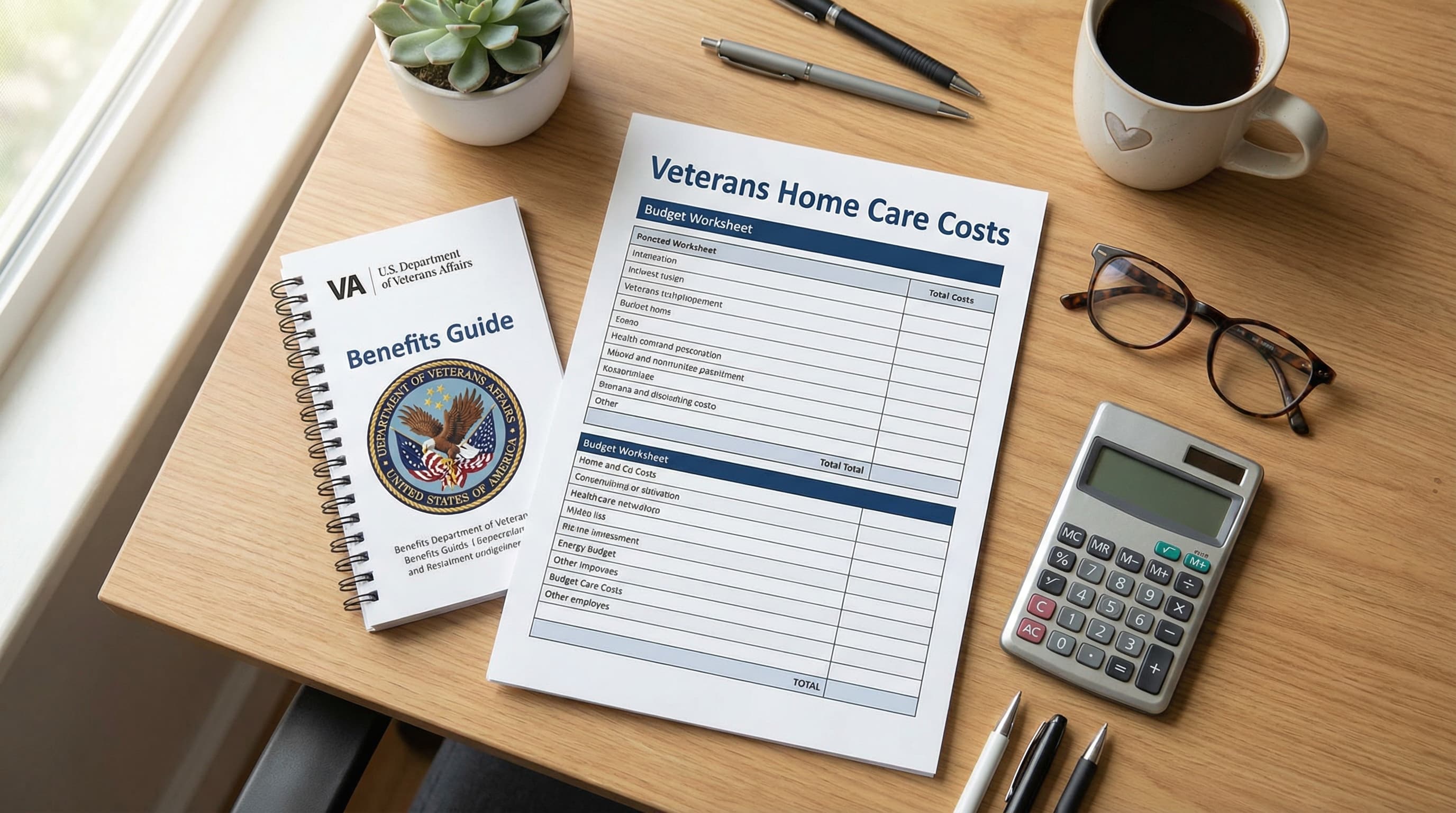
Veterans home care typically costs $25-50 per hour, but the actual out-of-pocket expense can be dramatically reduced through VA Aid & Attendance benefits (up to $2,431/month in 2025), VA health care programs, and state veteran services. Understanding the full cost structure and available funding options helps you plan affordable care that honors your military service while maintaining independence at home.
Average veterans home care costs by service type
Home care costs vary based on the level of care needed, caregiver qualifications, geographic location, and schedule requirements.
2025 National Average Rates
- Companionship care: $25-35/hour (social engagement, light housekeeping, meal prep)
- Personal care assistance: $30-45/hour (bathing, dressing, mobility assistance, medication reminders)
- Specialized veteran care: $35-50/hour (PTSD-informed caregiving, service-connected disability support)
- Skilled nursing care: $45-75/hour (licensed nurses for wound care, injections, medical monitoring)
- Live-in care: $250-400/day (24-hour presence with 8 hours sleep time)
- Overnight care: $175-300/night (8-10 hour shifts)
Regional variations: Urban areas and high cost-of-living states (California, New York, Massachusetts) typically charge 20-40% more than rural areas and lower cost-of-living states.
Monthly cost estimates for veterans
Monthly costs depend on how many hours of care you need per week. Here are common scenarios:
Part-time care (10-20 hours/week)
- 10 hours/week: $1,000-1,800/month (2-3 visits per week)
- 20 hours/week: $2,000-3,600/month (daily short visits or 3-4 longer visits)
- Typical use case: Independent veterans needing help with specific tasks like bathing, transportation to VA appointments, meal preparation
Full-time care (40+ hours/week)
- 40 hours/week: $4,000-7,200/month (8 hours/day, 5 days/week)
- 56 hours/week: $5,600-10,080/month (8 hours/day, 7 days/week)
- Typical use case: Veterans with moderate care needs, dementia, or recovery from surgery/hospitalization
Around-the-clock care
- Live-in care: $7,500-12,000/month (24-hour presence, 8 hours sleep)
- 24/7 awake care: $15,000-21,000/month (three 8-hour shifts with no sleep time)
- Typical use case: Veterans with advanced dementia, significant mobility limitations, or end-of-life care needs
Factors that affect your home care costs
Several factors influence the final price you'll pay for veterans home care:
Level of care required
- Companionship only: Lower rates ($25-35/hour) for social engagement and light household tasks
- Personal care: Mid-range rates ($30-45/hour) for hands-on assistance with ADLs (activities of daily living)
- Specialized needs: Higher rates ($35-50/hour) for PTSD-informed care, dementia care, service-connected disability support
- Medical care: Highest rates ($45-75/hour) for licensed nursing services
Geographic location
- Urban areas: 15-30% higher than suburban rates
- Rural areas: 10-20% lower than urban, but fewer providers available
- State differences: High cost-of-living states charge significantly more (Example: California $40-60/hour vs. Ohio $25-38/hour for same service)
Scheduling factors
- Standard hours: Monday-Friday, 8am-5pm (base rate)
- Evening/weekend care: 10-20% premium for nights and weekends
- Holiday care: 25-50% premium for major holidays
- Last-minute scheduling: Some agencies charge rush fees for same-day or next-day care
- Minimum hours: Many agencies require 2-4 hour minimums per visit
Agency vs. independent caregiver
The type of provider you choose significantly impacts cost and what's included:
Home Care Agency
Cost: $30-50/hour on average
Includes:
- Background checks, screening, training
- Backup caregivers if regular caregiver is sick
- Supervision and care coordination
- Liability insurance, workers' compensation
- Payroll taxes handled by agency
Independent Caregiver
Cost: $18-30/hour on average (20-40% less than agencies)
Considerations:
- You handle hiring, screening, background checks
- No backup if caregiver is unavailable
- You may be employer (payroll taxes, workers' comp)
- Less oversight and quality assurance
- Lower cost but more responsibility
How VA benefits reduce your out-of-pocket costs
Most veterans don't pay the full market rate for home care. VA benefits and other funding sources can dramatically reduce expenses.
VA Aid & Attendance benefit
The most valuable benefit for covering home care costs. VA Aid & Attendance provides:
- Up to $2,431/month for veteran without dependents (2025 rates)
- Up to $2,846/month for veteran with one dependent
- Tax-free cash benefit you can use for any home care provider
- No VA approval needed for specific providers or services
Example calculation: If you need 30 hours/week of personal care at $35/hour:
- Monthly cost: 30 hours × 4.33 weeks × $35 = $4,546
- VA Aid & Attendance: -$2,431
- Your out-of-pocket: $2,115/month (53% reduction)
VA Home Based Primary Care (HBPC)
- Free for eligible veterans enrolled in VA health care
- Comprehensive home-based medical care from VA interdisciplinary team
- Includes: Primary care visits, nursing, social work, physical therapy, dietary counseling
- Limitation: Medical services only, not custodial personal care
Veterans Directed Care (VDC)
- VA-funded program in select states
- Allows you to hire and manage your own caregivers (including family members in some cases)
- VA pays the caregiver directly through fiscal intermediary
- Monthly budget determined by care needs assessment
Other veteran funding sources
- VA Caregiver Support Program: Stipends for family caregivers of post-9/11 veterans with serious injuries
- State veterans homes: Some states offer subsidized home care programs
- County veteran services: Emergency assistance, respite care funds (varies by county)
- Veteran Service Organizations: Emergency financial assistance for short-term care needs
Non-VA payment options for veterans
Veterans can also use standard payment methods available to all seniors. Learn more about all payment options for veteran care.
Medicare (limited coverage)
- Covers: Skilled home health care (nursing, PT, OT, speech therapy) when medically necessary and doctor-ordered
- Does not cover: Custodial care, personal care assistance, companionship
- Limitation: Part-time or intermittent care only, not continuous care
TRICARE for Life
- Available to: Military retirees age 65+ with Medicare Parts A and B
- Coverage: Supplements Medicare for skilled home health services
- Limitation: Same as Medicare—no custodial care coverage
Long-term care insurance
- Covers: Custodial and personal care if policy includes home care benefits
- Typical benefit: $100-200/day for home care (varies by policy)
- Consideration: Some veterans purchased policies through MOAA, USAA, or other military-affiliated insurers
Private pay
- Full flexibility: Choose any provider and schedule
- No approval needed: Start services immediately
- Tax deduction: Home care costs may be deductible as medical expenses if you itemize
Comparing costs: home care vs. other options
Understanding comparative costs helps you make informed decisions about where to receive care.
2025 Average Monthly Costs
- Home care (20 hrs/week): $2,000-3,600/month
- Home care (full-time): $7,500-12,000/month
- Adult day care: $1,800-2,500/month (5 days/week)
- Assisted living: $4,500-7,000/month
- Memory care facility: $6,000-9,000/month
- Nursing home (private room): $8,500-12,000/month
- State Veterans Home: Varies by state, often significantly subsidized
Cost-effectiveness insight: Part-time home care (10-30 hours/week) is often the most cost-effective option for veterans who can still live independently with assistance. It provides needed support while avoiding the higher fixed costs of residential facilities.
How to reduce your veterans home care costs
Apply for all eligible VA benefits
- Many veterans are eligible for benefits they don't know about
- Work with a VA-accredited VSO (Veterans Service Organization) for free application help
- Apply even if you think you might not qualify—let the VA make that determination
Optimize your care schedule
- Use companion care rates when possible (vs. higher personal care rates)
- Schedule care during standard hours to avoid premium rates
- Consider live-in care if you need 12+ hours/day (often cheaper than shift care)
- Combine family help with professional care to reduce total hours needed
Get multiple quotes
- Contact 3-5 veteran-friendly providers for cost comparisons
- Ask about veteran discounts (some agencies offer 5-10% military discounts)
- Compare what's included in the hourly rate (some include supplies, others charge extra)
- Negotiate rates for longer-term commitments (monthly vs. hourly contracts)
Maximize medical expense deductions
- Home care costs count as unreimbursed medical expenses for VA Aid & Attendance calculation
- Keep detailed records of all care expenses
- Medical expenses may be tax-deductible if you itemize (consult tax professional)
Get a Free Veterans Home Care Cost Assessment
Free in-home assessments for veterans, including personalized cost estimates and VA benefit application assistance.
Ohio: (740) 276-8611 | Mid-Ohio Valley
Maryland: (443) 291-7100 | Southern Maryland
Questions to ask when comparing costs
When evaluating home care providers, ask these questions to understand true costs:
- What's included in your hourly rate? (Supplies? Transportation? Supervision?)
- What are your minimum hours per visit? (2-hour minimum vs. 4-hour minimum significantly affects cost)
- Do you charge premium rates for evenings/weekends/holidays?
- Are there any additional fees? (Start-up fees, care coordination fees, travel fees)
- Do you offer veteran discounts?
- Can you help with VA Aid & Attendance applications?
- What payment methods do you accept? (Private pay, VA benefits, long-term care insurance)
- Do you require contracts or commitments? (Month-to-month vs. long-term contracts)
Related Resources
- VA Aid & Attendance Benefit →
Learn how to get up to $2,431/month to help pay for home care
- Paying for Veterans Care →
Explore all funding options including TRICARE, Medicare, and state programs
- Choosing a Veteran-Friendly Provider →
Find providers who understand military culture and maximize VA benefits